
Harmonised End-of-Waste criteria: A key step to strengthening Europe’s tyre recycling market
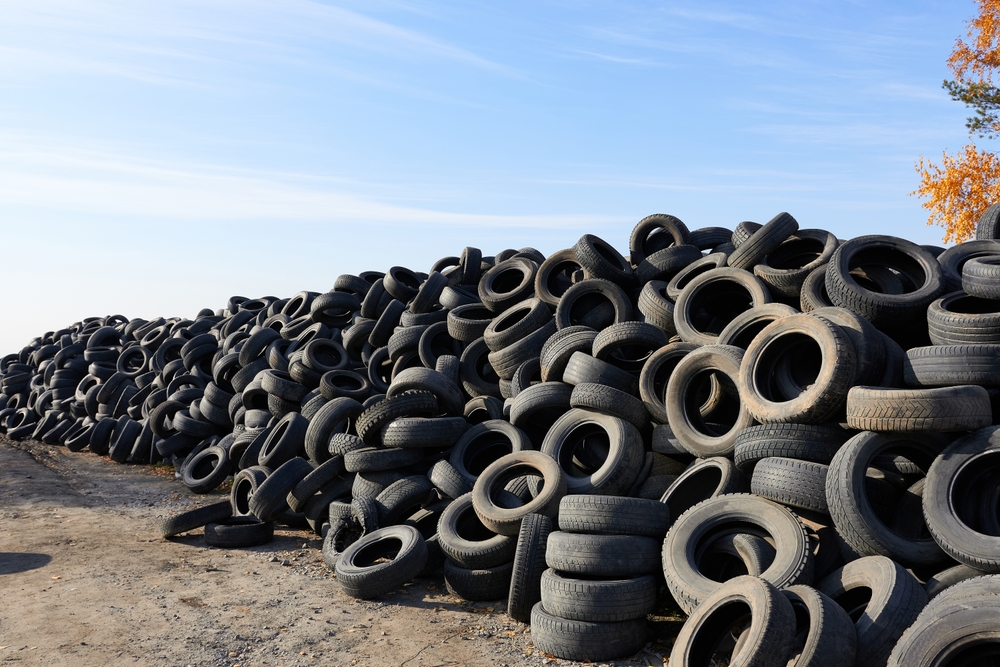
Harmonised End-of-Waste criteria: A key step to strengthening Europe’s tyre recycling market
EURIC[i] and ETRMA[ii] call for the development of EU-wide End of Waste (EoW) criteria for the End-of-Life Tyres (ELT)-derived Rubber Waste Stream. The rubber supply chain is ready for the next step in the advancement and uptake of the recycling of ELT-derived materials.
A major and persistent barrier for the tyre recycling industry is the lack of harmonised end-of-waste criteria throughout Europe. The lack of harmonisation creates significant difficulties for the tyre recycling industry and its supply chain, threating the sector’s viability. The tyre value chain considers that the EU harmonised EoW criteria will:
- Ensure a level playing field for trade across Europe by establishing equal conditions and with equivalent opportunities across borders.
- Reduce administrative burdens associated with the trade of recycled materials trading.
- Ensure that tyre and rubber products manufacturers can incorporate recycled materials into new products, thereby enhancing circularity.
- Secure that materials meet safety and quality criteria. Many regulations, like Declarations of Performance for construction products, or the REACH restriction on chemical substances only apply once the material has ceased being waste.
The new EU political agenda and the need for a single market for recycled rubber from ELT
In the face of the expected challenges for Europe in the upcoming years, the recently published Clean Industrial Deal (CID)[1] promises to prioritise circularity and access to materials to reduce dependencies and enhance resilience. In fact, a Circular Economy Act will be launched in 2026 with the objective of boosting demand for recycled materials and enhance the EU internal single market for waste and circular materials.
The European rubber recycling industry is fully prepared to process ELTs generated in Europe, recovering valuable resources and reintegrating them into the value chain as high-performance materials. This can only be achieved by developing markets for ELT derived materials. This will reduce Europe’s dependency on imports and minimise the EU’s ecological footprint abroad. Demand for rubber in the EU will only rise in the future, and the only way to meet that demand is by the increase and uptake of recycled materials.
The growing need for the raw materials produced by the tyre recycling industry has led to the adoption of national EoW criteria in several Member States.[2] While these measures might be an effective solution for the problems in local trade, they create complications during international trade between member states where EoW criteria set are not equivalent and therefore not recognised.
Despite the JRC’s scoping report[3] where rubber from ELT was named third in the list of top-candidate streams for which to develop EU-wide EoW criteria, shifting priorities have delayed action. These delays have left the tyre value chain waiting for more than three years for progress to begin even if the raw materials from ELT fulfil all the requirements set in Article 6 of the Waste Framework Directive (WFD).[4] To solve these issues, the Commission should develop EoW criteria using industry-backed technical reports. When the value chain agrees on common standards, like with tyres, swift implementation is crucial. EuRIC and ETRMA urge the European Commission to kickstart the development of harmonised End-of-Waste criteria for rubber from ELTs now, in line with the Joint Research Center’s recommendations and the widespread calls from the entire tyre value chain. By turning waste into resources, recycling reintroduces valuable materials into value chains over and over again. By bridging circularity and climate neutrality, recyclers are pioneers in leading Europe’s industrial transition.
State of play for end-of-waste criteria for raw materials from end-of-life tyres (ELT) in Europe
The development of end-of-waste criteria, which specify when waste ceases to be waste and becomes a product, is crucial to boost the use of recycled materials and to develop a well-functioning internal market for those materials in the EU. The WFD sets specific criteria in its article 6. Back in 2021, EuRIC, the European Recycling Industries’ Confederation, together with the European Tyre and Rubber Manufactures Association (ETRMA) published a report, prepared by AECOM, on the assessment of the WFD end-of-waste criteria for end-of-life tyre rubber. [5]
In 2024 around 3.9 million tons of ELT have been collected and made available for treatment. [6] Approximately half of the tyres are recycled into rubber, steel, and textile fibres. The other half is destined for co-incineration in the cement industry. Moreover, up to a third of the treatment of ELTs occurs outside of Europe.[7] The rates of collection have increased slightly over the years; however, recycling rates have remained stable. Action is needed if the tyre recycling sector is expected to adapt to the projected rise of ELT treatment in Europe (Figure 1).
Figure 1. ELT collection in Europe[8]
Conclusion
ELT-derived material is an ideal candidate for EU-wide end-of-waste criteria, a position supported by the entire tyre value chain. Thanks to the close collaboration among all actors involved in tyre production and recycling, there are no conflicts of interest that would hamper or delay the introduction of EoW criteria.
Securing a common framework for rubber from ELTs to cease being classified as waste is essential. This can only be achieved through harmonised European EoW criteria, applicable across all Member States and in the form of a binding legal text. This will build market trust, increase investors’ security and stimulate research and development into innovative solutions for this valuable material.
EURIC and ETRMA are committed to supporting the European commission in developing a feasible and workable set of rules and, together, make circularity a reality.
[1] European Commission. (2025). The Clean Industrial Deal: a joint roadmap for competitiveness and decarbonisation
[2] Portugal (Portaria n.°20/2018, de 17 de janeiro), Spain (TED/1522/2021), France (Arrêté du 11 décembre 2018), Italy (DM78/2020), Lithuania (February 14, 2022. Order No. D1—48)
[3] Orveillon, G., Pierri, E., Egle, L., Gerbendahl, A., Wessman, P., Garcia John, E. and Saveyn, H., Scoping possible further EU-wide end-of-waste and by-product criteria, Publications Office of the European Union, Luxembourg, 2022.
[5] AECOM. (2021). End of Life Tyre Rubber: Assessment of Waste Framework Directive End-of-Waste Criteria.
[6]ETRMA Quarterly Update 2025 Q1.
[7] Based on exports numbers under HS code 4004 as reported in AECOM. (2021). End of Life Tyre Rubber: Assessment of Waste Framework Directive End-of-Waste Criteria.
[8] Summary of yearly published ETRMA ELT collection data
[i] EuRIC, the European Recycling Industries’ Confederation is the umbrella organisation for the recycling industries in Europe. Through its 80 members from 24 European countries, EuRIC represents more than 5,500 large companies and SMEs involved in the recycling and trade of various resource streams. They represent a contribution of 95 billion EUR to the EU economy and 300,000 green and local jobs
[ii] The European Tyre & Rubber Manufacturers Association (ETRMA) represents 14 corporate members whose global sales account for 70% of the worldwide tyre market, including 8 of the top 10 industry leaders. Collectively, these manufacturers maintain a robust presence in the European Union (EU) and candidate countries, operating over 80 production facilities and more than 20 R&D centres. In total, the tyre sector supports nearly 500,000 jobs across the EU, considering the entire European automotive servicing and mobility sector, more than 13,9 million job opportunities are created