What we recycle

Plastics

Plastics are composed of polymers i.e., compounds made of many small molecules.

Ferrous metals

Ferrous metals, primarily composed of iron, include materials like steel and cast iron, which are commonly found in construction, manufacturing, and transportation.

Non-Ferrous metals

Non-ferrous metals, such as aluminum, copper, lead, zinc, and titanium, do not contain iron and are valued for their resistance to corrosion and high conductivity.

Paper

Recycled paper is a versatile material that can replace or supplement virgin pulp to create new products like packaging, newspapers, and insulation.

Textiles

Textiles, including both synthetic fibers like polyester and natural fibers like cotton, are integral to daily life, with global production nearly tripling since 1975.

Tyres

Tyres contain multiple valuable materials such as rubber (75%), steel (15%) and textile fibres (10%).

Construction & Demolition

Construction and demolition (C&D) waste includes materials like concrete, bricks, wood, metals, glass, plastics, and hazardous substances such as asbestos.

End-of-life Vehicles

End-of-life Vehicles (ELVs) contain valuable materials like metals (steel, aluminum), plastics, rubber, and glass, as well as batteries.

E-waste

E-waste, otherwise referred to as waste electronical and electronic equipment (WEEE), is mainly composed of non-ferrous metals (nickel, copper, lead, etc.

Ships

End-of-life ships are decommissioned vessels that contain valuable materials like steel, metals, and electronics, along with hazardous substances such as asbestos, oils, and toxic chemicals.

Who we are

25 April 2025

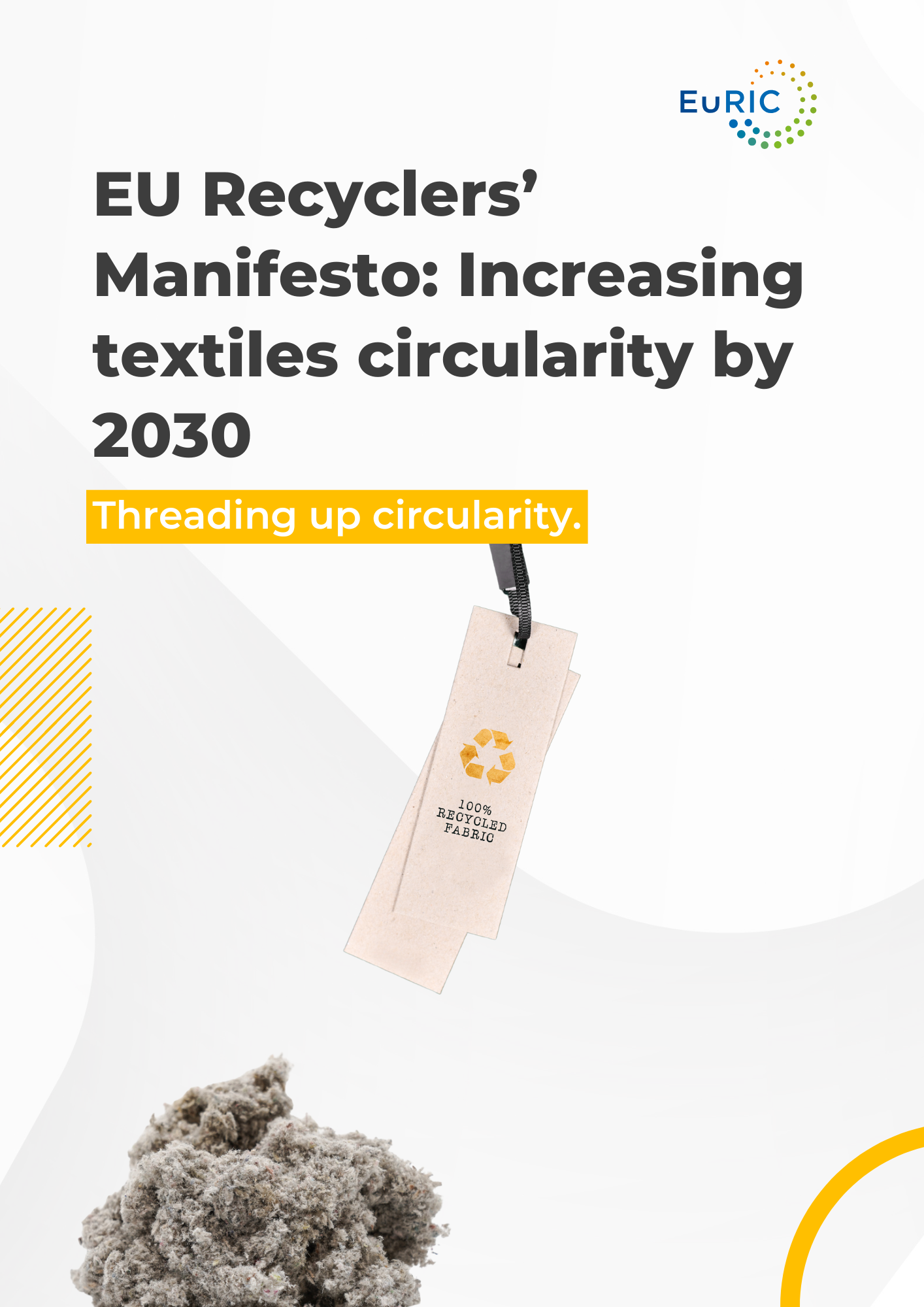
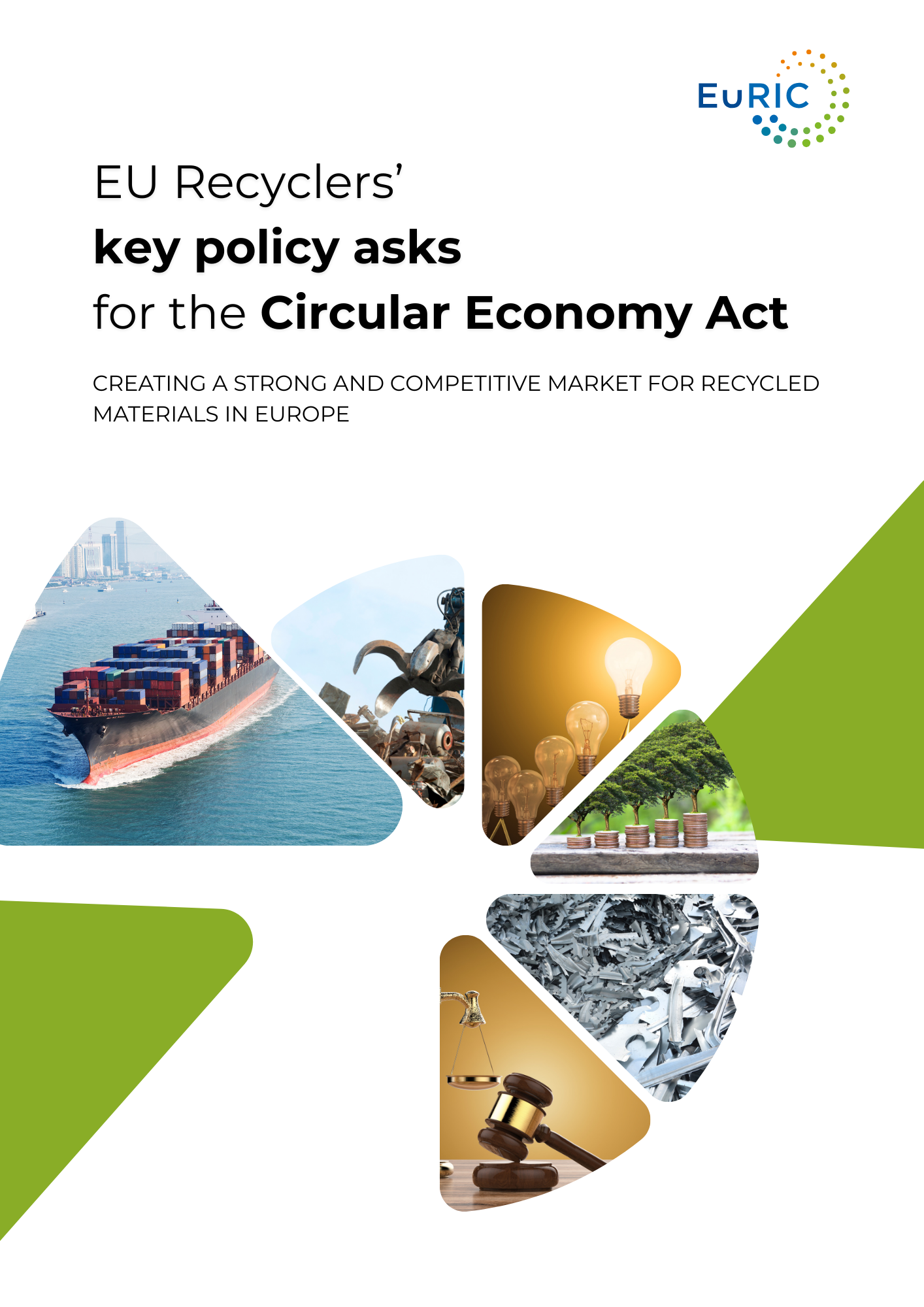
EU Recyclers’ key policy asks for the Circular Economy Act
Circularity is no longer a niche environmental ambition – it is fast becoming a defining pillar of Europe’s industrial strategy. Amid mounting geopolitical pressures, volatile supply chains, and climate emergencies, the ability to retain materials, reduce resource dependence, and lower emissions has moved to the core of EU policymaking. This shift is visible across several flagship initiatives: from the Green Deal to the Clean Industrial Deal and, most recently, the Commission’s Steel and Metals Action Plan.

In each case, the message is clear – accelerating the circular economy is essential to securing Europe’s economic resilience and decarbonisation agenda. Recycling, as a strategic enabler of circularity, plays a critical role. It reduces the EU’s reliance on virgin raw materials, cuts energy use and carbon emissions, and supplies industries with locally sourced recycled materials. Yet the sector operates in a fragmented policy environment, under increasing pressure from export restrictions and unfair international competition.

The upcoming Circular Economy Act, expected in 2026, represents a pivotal opportunity to address these challenges and translate Europe’s ambitions into functioning markets, by removing obstacles to the free movement of recycled materials, and by creating strong demand for circular products.

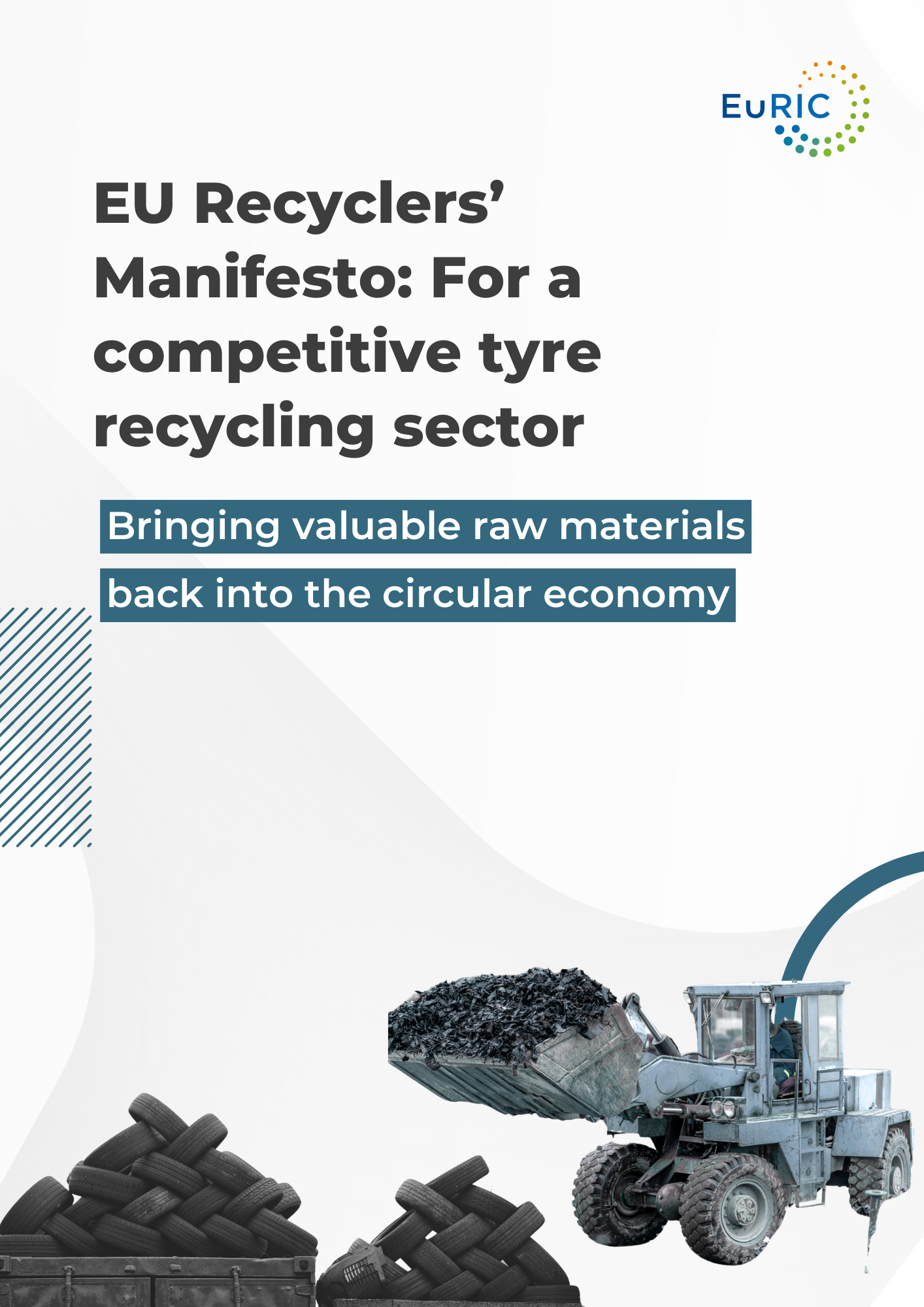
In this context, EuRIC – the European Recycling Industries’ Confederation – puts forward a set of focused policy recommendations and asks. These aim to unlock demand, establish a level playing field for recycled materials, and support the development of a globally competitive recycling industry aligned with the EU’s environmental and strategic objectives
Download the publication

Download

Related Publications

Stay informed with our latest insights, anytime, anywhere.