What we recycle

Plastics

Plastics are composed of polymers i.e., compounds made of many small molecules.

Ferrous metals

Ferrous metals, primarily composed of iron, include materials like steel and cast iron, which are commonly found in construction, manufacturing, and transportation.

Non-Ferrous metals

Non-ferrous metals, such as aluminum, copper, lead, zinc, and titanium, do not contain iron and are valued for their resistance to corrosion and high conductivity.

Paper

Recycled paper is a versatile material that can replace or supplement virgin pulp to create new products like packaging, newspapers, and insulation.

Textiles

Textiles, including both synthetic fibers like polyester and natural fibers like cotton, are integral to daily life, with global production nearly tripling since 1975.

Tyres

Tyres contain multiple valuable materials such as rubber (75%), steel (15%) and textile fibres (10%).

Construction & Demolition

Construction and demolition (C&D) waste includes materials like concrete, bricks, wood, metals, glass, plastics, and hazardous substances such as asbestos.

End-of-life Vehicles

End-of-life Vehicles (ELVs) contain valuable materials like metals (steel, aluminum), plastics, rubber, and glass, as well as batteries.

E-waste

E-waste, otherwise referred to as waste electronical and electronic equipment (WEEE), is mainly composed of non-ferrous metals (nickel, copper, lead, etc.

Ships

End-of-life ships are decommissioned vessels that contain valuable materials like steel, metals, and electronics, along with hazardous substances such as asbestos, oils, and toxic chemicals.

Who we are

20 March 2025

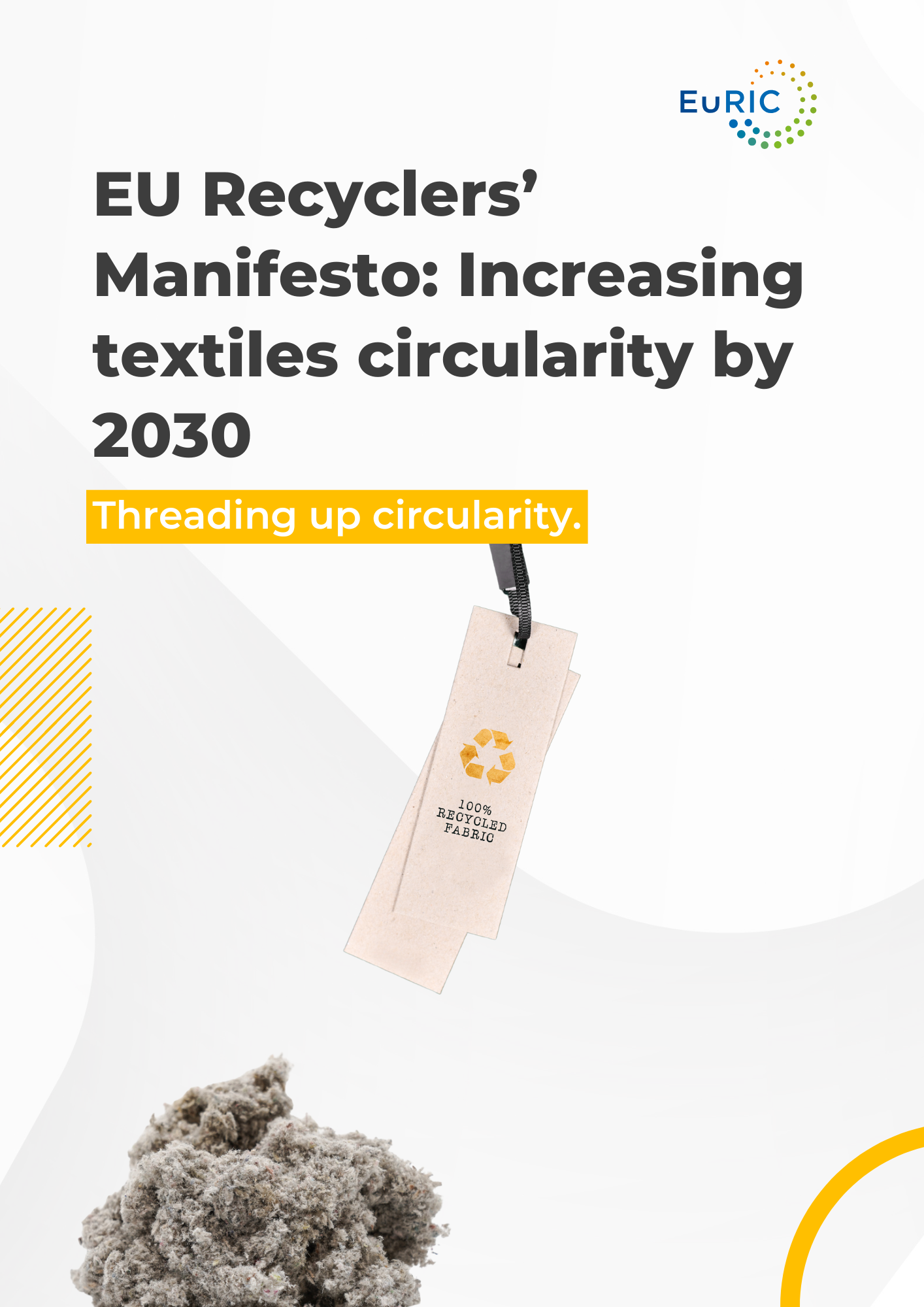
EU Recyclers’ Manifesto: Increasing textiles circularity by 2030
Each EU citizen generates about 16 kg of textile waste annually, but only 4.4 kg is collected separately within the EU for reuse and recycling. The majority goes to mixed household waste, ending up in incinerators or landfills. The textile sector significantly impacts the environment, being the 3rd largest contributor to environmental pressure on water and land use in the EU, and the 5th in raw materials consumption and greenhouse gas emissions [1].

Improving circularity in the textiles sector could significantly reduce these negative impacts, by extending the lifecycle of textile products and increasing the use of textile recycled fibres into new products. However, textile recycling remains currently limited, with less than 1% of material being recycled back into new clothing (the rest being recycled into other applications, incinerated or landfilled) [2].

Additionally, the textiles collection, sorting for reuse, and recycling sector in Europe is facing an unprecedented crisis with rising sorting costs, dropping sales of second-hand clothes, and a lack of demand for recycled textile content [3]. The rise of the ultra-fast fashion sold online has further increased those challenges, with a serious impact on the environment [4].

The objectives fixed in the EU Strategy for sustainable and circular textiles must be translated into a robust European regulatory framework.

EuRIC Textiles urges EU policymakers to actively support textiles circularity by shaping an industry environment where innovation thrives, investments in circularity are rewarded, and the textile reuse and recycling industry flourishes as a pillar of sustainability.
Download the publication

Download

Related Publications

Stay informed with our latest insights, anytime, anywhere.