


Do you believe in circularity after end-of-life? The ELVR must deliver
Will the revised ELV Regulation deliver the binding targets needed to secure a truly circular and competitive automotive industry?
Opinion piece for Euractiv, by Maria Vera Duran, Recycling Europe Policy Director
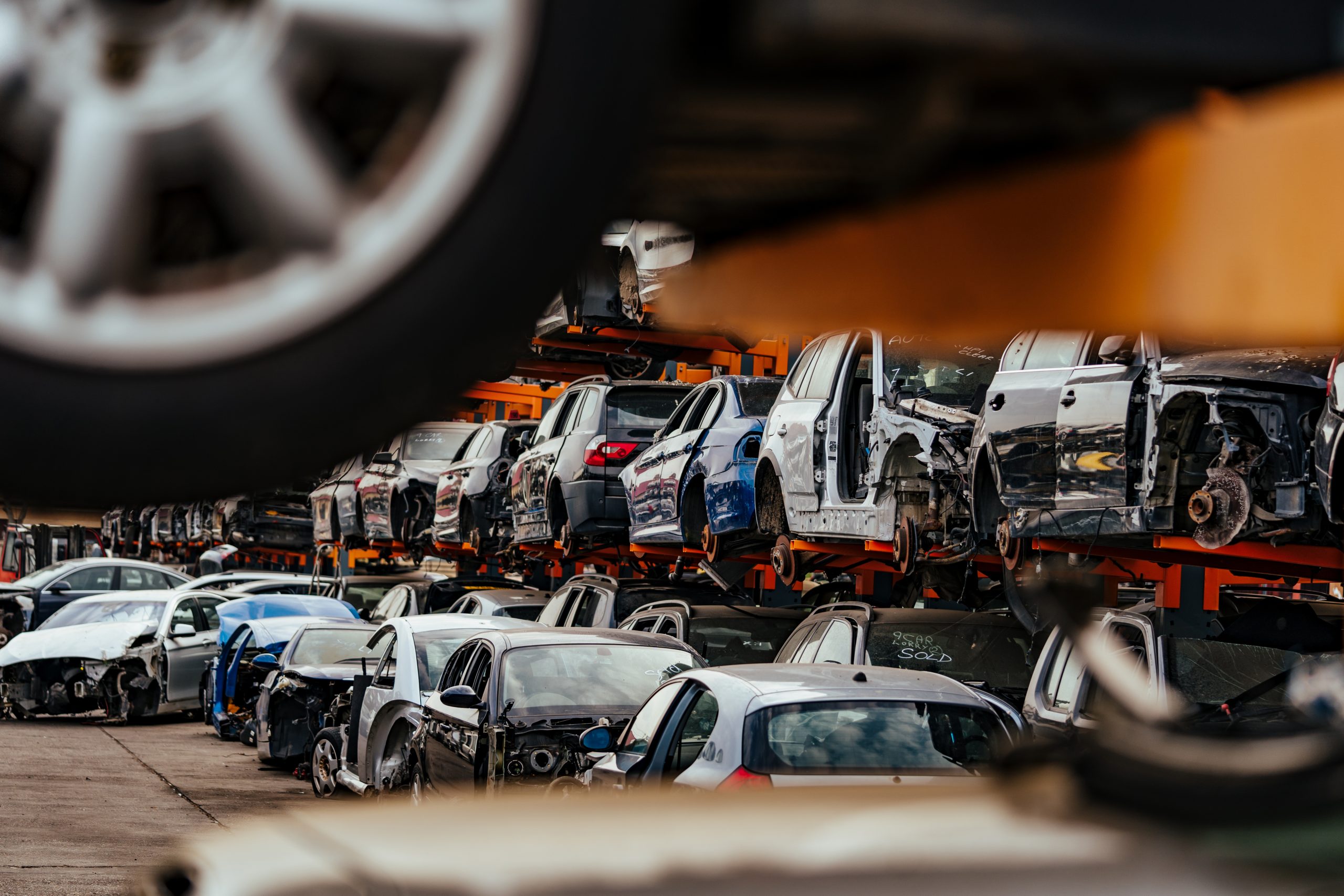
Have you ever wondered what happens to your car when it reaches the end of its life?
In Europe, end-of-life vehicles (ELVs) are recycled at a high rate, with an average of 95% of materials being reused and recovered, and 85% being reused and recycled. However, some challenges remain such as the lack of circularity in design and production, the uptake of recycled materials in new vehicles or the low recycling rates for specific materials, such as plastics – with 80% of ELV plastics being currently incinerated or landfilled. This is a missed opportunity with enormous environmental and economic consequences.
As the EU finalises the new the End-of-Life Vehicles (ELV) Regulation, a crucial piece of legislation designed to reduce the environmental impact of vehicles across their entire lifecycle, there is a critical window to push for real change.
On 17 June, EU environment ministers adopted their position on the new ELV Regulation. There is progress: the inclusion of mandatory recycled plastic targets and stronger traceability of ELVs are important steps forward. But at the same time, some worrying signs of regression threaten to stall Europe’s decarbonisation momentum and its industrial competitiveness.
The goal is clear: decarbonisation. But without circularity, it’s incomplete. Keeping materials in the loop, especially high-impact ones like plastics and steel, is vital to cut emissions sustainably and effectively.
As Europe pushes to reduce its emissions, curb reliance on imported raw materials, and strengthen strategic autonomy, recycled materials are becoming industrial essentials and perhaps the only scalable way to square competitiveness with climate neutrality. Manufacturers need low-carbon, traceable inputs as regulations tighten, and the EU must ensure critical resources stay within its borders. China’s growing dominance over raw material supply chains and green technologies only increases the urgency.
One promising aspect of the Council’s position is the mirror clause for imports and third-party audits of recycled plastic production, both within and outside the EU. This is a positive step toward market fairness and transparency, correcting distortions caused by uneven global standards. But such progress is overshadowed by a broader weakening of core obligations.
For example, the recycled plastic content target was slashed from the Commission’s proposed 25% to just 15%. This directly contradicts the Regulation’s own logic. While it mandates that 30% of plastics from ELVs must be recycled within five years, it only requires 3.75% of recycled plastic coming from ELVs in new vehicles after six. This disconnect undermines the entire effort, shaking market confidence and slowing investment in circular plastics.
Higher recycling rates for ELV plastic won’t be achieved without strong, binding targets that drive both supply and demand.
“Higher recycling rates can only be achieved if car manufacturers commit to using recycled plastics in new vehicles. Circularity must be a shared responsibility across the value chain.”
EuRIC, the voice of Europe’s recycling industries, has consistently urged EU institutions to restore the 25% recycled content target for post-consumer waste plastics, with at least 25% closed-loop content. Such clarity would unlock investments, scale up innovation, and strengthen European recycling value chains. Fortunately, several EU lawmakers share this view, and the Commission knows what’s at stake if ambition fades.
On metals, the complete lack of binding recycled content targets, especially steel, is a glaring missed opportunity. Each car contains roughly 800kg of steel, accounting for up to 30% of its production emissions. Yet today, only about 6% of scrap steel makes its way back into new vehicles. Without clear demand-side signals, even the strictest quality rules risk being toothless, thereby raising barriers for recyclers while offering no guarantee that carmakers will use recycled steel.
The automotive sector’s circular future depends on setting ambitious, binding recycled content targets for metals, alongside plastics. To guarantee this, EuRIC calls for a minimum of 30% recycled steel from post-consumer scrap in all vehicles by 2030, increasing to 40% by 2035. Europe’s recyclers already deliver high-quality steel, but what they lack is long-term certainty and a stable market. Clear, binding mandates would fix this – unleashing investment and guaranteeing demand.
And now, just as recyclers are being asked to do more, the foundation of trust in the system has been shaken. The recent €458 million fine against carmakers for an alleged anti-recycling cartel (spanning 2002–2027) is a stark reminder of how vulnerable the recycling value chain is to market distortion.
That’s why we’re calling on EU policymakers to rise to the challenge. Deliver a truly circular ELV Regulation – one with clear, binding recycled content targets for both plastics and metals. One that creates predictable demand, scales up infrastructure, and drives innovation. One that secures feedstock, ensures robust enforcement, and sets quality requirements through market standards, not rigid legal thresholds.
Above all, it must embed circularity as a shared responsibility – from recyclers to manufacturers to policymakers.
Do you believe in circularity? Because the ELVR must prove that belief is not just words – but action.