
What we recycle

Plastics

Plastics are composed of polymers i.e., compounds made of many small molecules.

Ferrous metals

Ferrous metals, primarily composed of iron, include materials like steel and cast iron, which are commonly found in construction, manufacturing, and transportation.

Non-Ferrous metals

Non-ferrous metals, such as aluminum, copper, lead, zinc, and titanium, do not contain iron and are valued for their resistance to corrosion and high conductivity.

Paper

Recycled paper is a versatile material that can replace or supplement virgin pulp to create new products like packaging, newspapers, and insulation.

Textiles

Textiles, including both synthetic fibers like polyester and natural fibers like cotton, are integral to daily life, with global production nearly tripling since 1975.

Tyres

Tyres contain multiple valuable materials such as rubber (75%), steel (15%) and textile fibres (10%).

Construction & Demolition

Construction and demolition (C&D) waste includes materials like concrete, bricks, wood, metals, glass, plastics, and hazardous substances such as asbestos.

End-of-life Vehicles

End-of-life Vehicles (ELVs) contain valuable materials like metals (steel, aluminum), plastics, rubber, and glass, as well as batteries.

E-waste

E-waste, otherwise referred to as waste electronical and electronic equipment (WEEE), is mainly composed of non-ferrous metals (nickel, copper, lead, etc.

Ships

End-of-life ships are decommissioned vessels that contain valuable materials like steel, metals, and electronics, along with hazardous substances such as asbestos, oils, and toxic chemicals.

Who we are

IARC 2025

When & where

19 March 2025 - 21 March 2025
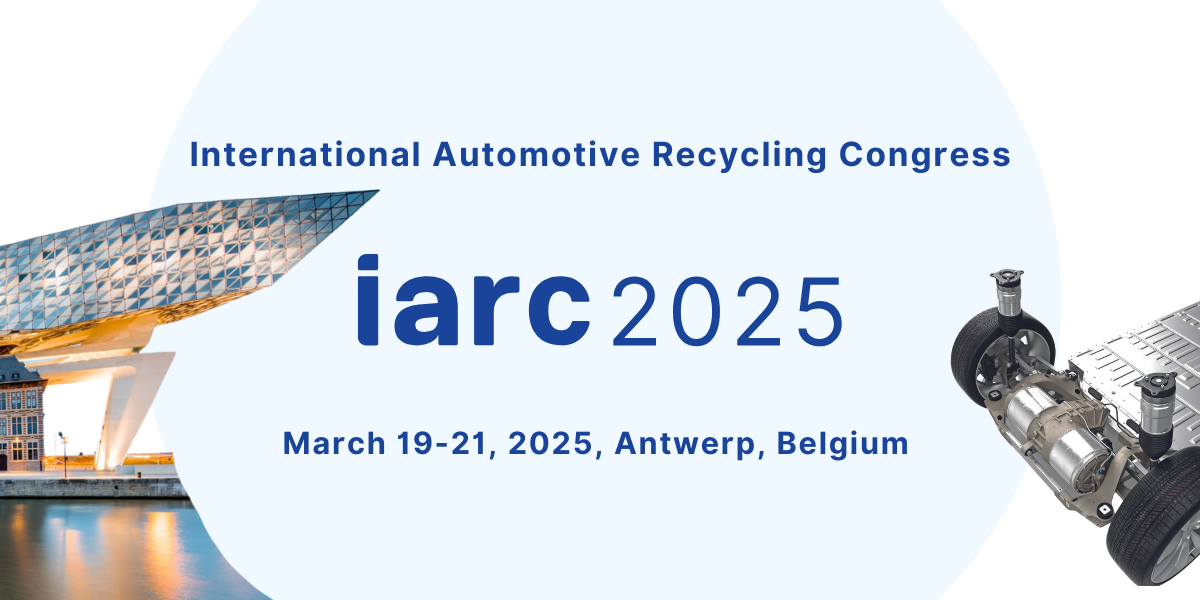
When & where

19 March 2025 - 21 March 2025

IARC returns to Antwerp in March 2025 with exciting new developments! 

The ELV Regulation’s scope is expanding to include commercial, heavy-duty vehicles, and motorcycles. The critical role of Original Equipment Manufacturers (OEMs) in recycling will be highlighted at the conference.

Car, motorbike, truck, and bus manufacturers need to take an active role in preparing for the significant responsibilities and financial implications that new European regulations and policies on critical raw materials and decarbonization will bring. The ELV Regulation introduces new rules for vehicle design and end-of-life management, requiring lorries, buses, and motorcycles to be treated at authorized treatment facilities, and restricting the export of non-roadworthy vehicles.

IARC 2025 will be the perfect platform for industry leaders to collaborate, share insights, and stay ahead of these changes. With all key players of the vehicle circular economy in attendance, this is your chance to contribute to the debate on regulations and policies with global impact while there is still time!


IARC is the international platform for discussing the latest developments and challenges in circular economy and automotive recycling. We bring together up to 300 decision-makers from the automotive and recycling sector, especially car manufacturers, metal suppliers, plastic scrap traders, recyclers, shredder operators, policy-makers and many more.

Register to the event

Register